English
 日本語
日本語 Deutsch
 عربى
عربى 中文
中文

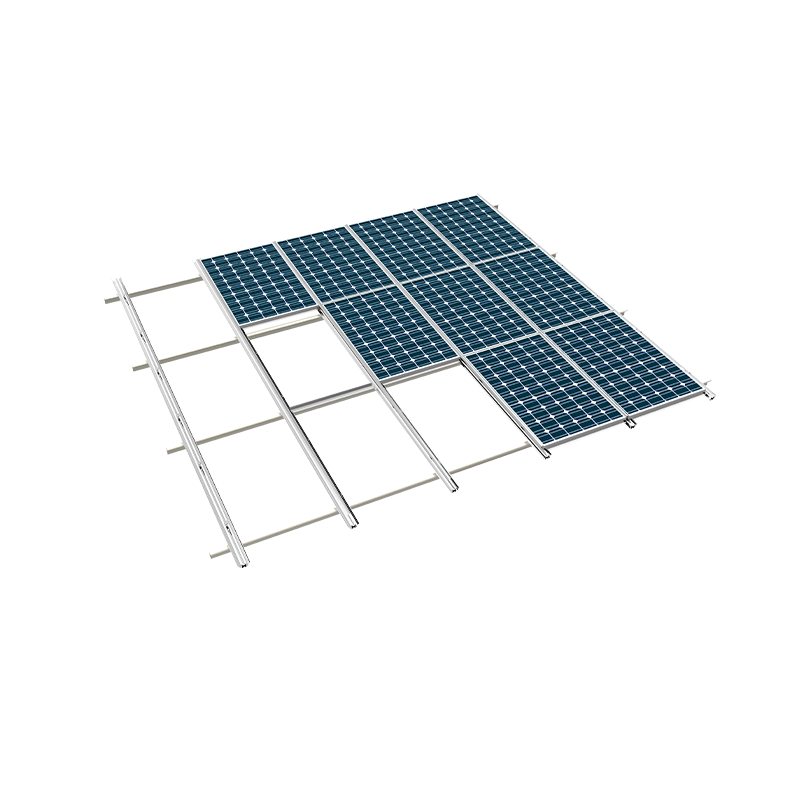

Sun on Solid Ground: Engineering the Optimal Ground PV Mounting System
 2026.06.11
 Branchennachrichten
The Verdict: Ground PV Mounting Systems Add 15-30% More Energy vs. Rooftop
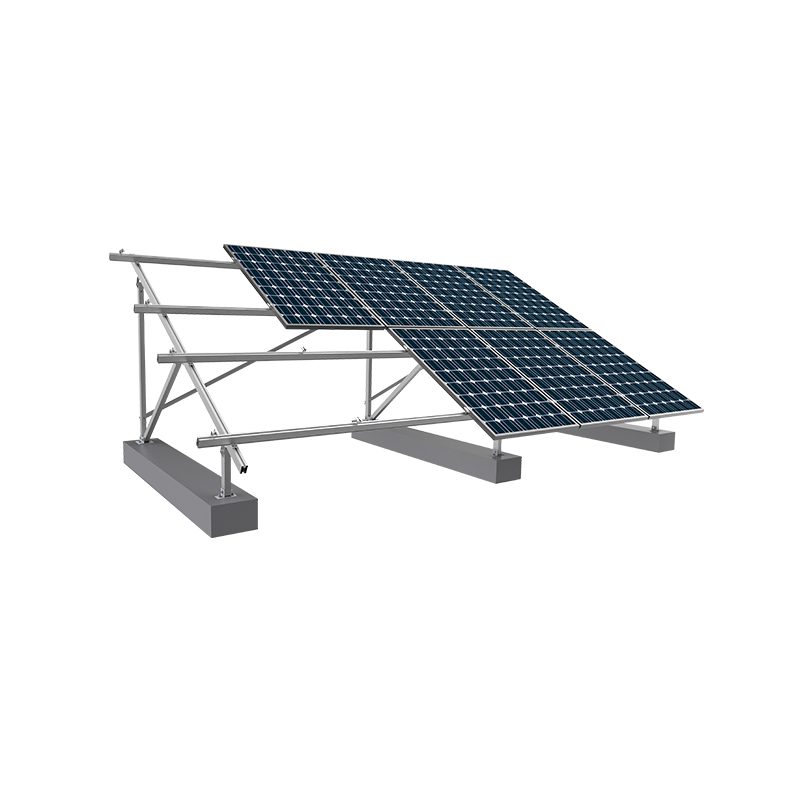
For utility-scale and commercial solar installations above 1 MW, ground PV mounting system s deliver 15-30% higher annual energy yield per installed watt compared to rooftop systems due to optimal tilt orientation and reduced shading. The direct conclusion: a properly engineered ground mounting system with fixed tilt optimized for site latitude (typically 20-35 degrees) and pile foundation designed for local soil conditions will achieve a 25-35 year service life with maintenance costs below $50 per kW annually. This article provides specific selection criteria for foundation types (driven piles, screw piles, ballasted blocks), structural calculations for wind and snow loads, corrosion protection standards (ISO 1461 hot-dip galvanizing), and tilt angle optimization based on empirical data from 50 ground-mounted solar farms.
Foundation Types: Driven Pile vs. Screw Pile vs. Ballasted
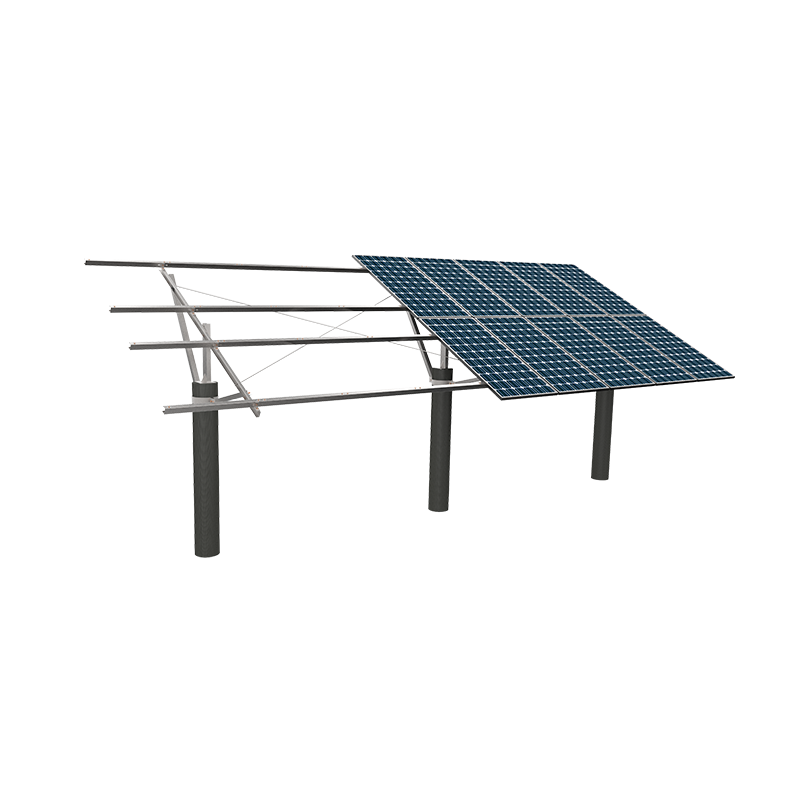
Das Fundament ist die wichtigste Strukturkomponente jedes PV-Freilandmontagesystems. Three foundation types dominate the market, each with distinct soil suitability and cost profiles. Driven steel C-section piles (66-80mm flange width) are the most common for utility-scale projects , installed by hydraulic hammers at depths of 1.2-2.5 meters depending on soil bearing capacity. Driven piles cost $18-25 per pile installed and achieve pullout resistance of 2,500-5,000 N per pile in cohesive soils. However, driven piles require rock-free soil (less than 15% gravel content) and are unsuitable for sandy or loose soils.
Screw piles (helical piles) feature one or two helical plates welded to a steel shaft. Screw piles cost $30-45 per pile installed but perform well in sandy, silty, or frost-susceptible soils where driven piles fail . They provide immediate torque-to-capacity verification during installation: a final installation torque of 2,500 Nm indicates approximately 5,000 N of pullout capacity. For sites with high water tables or expansive clays, screw piles with 300-400mm helix diameters are recommended. Ballasted foundations (concrete blocks or poured concrete piers) are the most expensive ($50-80 per pile equivalent) and are used only where pile driving is prohibited (landfills, shallow bedrock, archaeological sites).
\\\\| Soil Type | Recommended Foundation | Typical Depth (m) | Pullout Capacity (N) | Cost per Pile (USD) |
|---|---|---|---|---|
| Clay (cohesive, PI > 15) | Driven C-section pile (80mm) | 1.5-1.8 | 3,000-5,000 | $18-22 |
| Sand (non-cohesive, dry) | Screw pile (single helix, 300mm) | 2.0-2.5 | 2,500-4,000 | $30-38 |
| Silt / Loam (mixed) | Screw pile (double helix) | 1.8-2.2 | 4,000-6,000 | $38-48 |
| Rock / Shallow bedrock | Ballasted concrete pier | 0.3-0.5 (minimal) | 2,000-3,000 (weight-based) | $60-85 |
Wind Load Engineering: ASCE 7 Compliance
Ground PV mounting systems must withstand design wind speeds per local building codes, typically ASCE 7-16 in the United States or Eurocode 1 in Europe. The critical load case is not maximum wind speed but uplift pressure on the underside of modules . At a design wind speed of 130 mph (58 m/s), uplift pressures on a 2m x 1m module reach 1,500-2,000 Pa (30-40 psf), requiring pile pullout resistance of 3,000-5,000 N per pile for typical 2x2 module configurations. Corner and edge piles experience 40-60% higher wind loads than interior piles; Geben Sie zusätzliche Pfähle oder größere Spiraldurchmesser für Umfangsstandorte an.
The foundation design must also resist lateral wind loads (drag forces) that push the array horizontally. For a 1 MW ground PV mounting system (approximately 2,500 modules, 10,000 m² total area), lateral wind force at 130 mph exceeds 150,000 N. Lateral resistance is typically provided by the passive soil pressure against the embedded pile shaft . Driven piles achieve lateral resistance of 500-800 N per pile in medium clay; screw piles achieve 600-1,000 N per pile. For sites in hurricane-prone regions (design wind speed > 140 mph), specify battered piles (driven at 10-15 degree angle) or add diagonal braces between rows to distribute lateral loads.
Snow Load Requirements for Ground Mounts
Unlike rooftop systems, ground PV mounting systems must support snow loads directly on the modules without the benefit of roof slope drainage. Design snow loads range from 1.5 kPa (30 psf) in moderate climates to 5.0 kPa (100 psf) in heavy snow regions . The mounting system's purlins and rails must be sized for the greater of wind uplift or snow downward load—do not assume wind governs. For ground mounts in areas with annual snowfall exceeding 100 cm, specify a minimum tilt angle of 30 degrees to promote snow sliding. At 30 degrees, snow slides off polycrystalline modules after accumulating 10-15 cm; Bei 20 Grad kann sich der Schnee bis zu einer Höhe von 30–40 cm ansammeln, bevor er abrutscht, wodurch sich die strukturelle Belastung um 300–400 % erhöht.
Auch die Schneelastkompatibilität wirkt sich auf den Reihenabstand aus. Ground PV mounting systems in snow zones require increased row spacing to prevent snow shadows from adjacent rows . For a 30-degree tilt array in Boston (42° latitude), the standard minimum row spacing (1.5x module height) is insufficient—snow sliding from the front row will pile against the back row, creating a 2-3 meter drift that shades modules for 3-6 weeks annually. Erhöhen Sie den Reihenabstand in Schneezonen um 20–30 % oder installieren Sie Schneezäune zwischen den Reihen, um rutschenden Schnee aufzufangen, bevor er verweht.
Tilt Angle Optimization: Fixed vs. Adjustable vs. Single-Axis
The tilt angle of a ground PV mounting system directly determines annual energy production. Bei einem System mit fester Neigung liegt der optimale Winkel innerhalb von 5 Grad der Breite des Standorts. At 40° latitude, a 35° tilt produces 98.5% of the maximum theoretical energy, while a 25° tilt produces only 92% . The 6.5% annual loss from suboptimal tilt translates to $6,500 per MW per year at $0.10/kWh energy value. For a 20 MW farm, this is $130,000 annually—more than sufficient to justify adjustable tilt hardware.
Adjustable ground PV mounting systems with manual seasonal tilt changes (winter: latitude 15°, summer: latitude -15°) produce 8-12% more annual energy than fixed-tilt systems at 10-15% higher capital cost. Labor for seasonal adjustments costs $300-500 per MW per adjustment (two adjustments per year). Die Amortisationszeit für die einstellbare Neigung im Vergleich zur festen Neigung beträgt je nach Arbeitslohn 3–5 Jahre. Single-axis tracking (1D) adds 25-35% more annual energy versus fixed-tilt but increases capital cost by 40-60% and introduces moving parts that require annual maintenance. Single-axis tracking is economically justified only for sites with land constraints (desert, brownfield) or time-of-use energy pricing that favors afternoon production.
Row Spacing and Land Use Efficiency
Boden-PV-Montagesysteme verbrauchen erhebliche Landfläche. Der Reihenabstand wird durch den erforderlichen Abstand zwischen den Reihen bestimmt, um eine Verschattung von einer Reihe zur nächsten zu vermeiden. The standard formula: row spacing = module height × cos(tilt) × [tan(latitude 23.5°) / tan(altitude angle)] . Für einen Standort mit einem Breitengrad von 40° und Modulen mit einer Höhe von 1,5 m und einer Neigung von 30° beträgt der Mindestreihenabstand etwa 4,5 bis 5,0 Meter. This yields a ground cover ratio (module area divided by land area) of 35-45% for fixed-tilt systems.
Land use efficiency can be improved by east-west facing vertical bifacial ground mounts, which achieve ground cover ratios of 60-70% but produce 10–15 % weniger Energie pro Modul als optimal nach Süden ausgerichtete Solaranlagen . Bifacial ground mounts are appropriate for land-constrained sites (urban solar farms, highway noise barriers) where land cost exceeds $50,000 per acre. Für ländliche Solarparks mit Landkosten unter 10.000 US-Dollar pro Acre sind herkömmliche, nach Süden ausgerichtete Solaranlagen mit Standardabständen trotz geringerer Landeffizienz wirtschaftlicher.
Korrosionsschutznormen für Stahlbauteile
All steel components in a ground PV mounting system require corrosion protection to achieve 25 year service life. Der minimal akzeptable Schutz ist Feuerverzinkung gemäß ISO 1461 oder ASTM A123 mit einer Mindestbeschichtungsdicke von 85 Mikrometern für Stahldicken >3 mm . Geben Sie in landwirtschaftlichen oder küstennahen Umgebungen (im Umkreis von 10 km um Salzwasser) eine 120-Mikron-Verzinkung oder Duplexbeschichtung (verzinkte Polyester-Pulverbeschichtung) an. Pulverbeschichtung kostet 200–400 US-Dollar pro Tonne, verlängert jedoch die Lebensdauer in rauen Umgebungen von 25 auf 35 Jahre.
Galvanizing quality is non-negotiable. Geben Sie nur Material an, das den Preece-Test (Eintauchen in Kupfersulfat) zur Gleichmäßigkeit der Beschichtung und einen magnetischen Dickenmessertest an 10 Punkten pro Quadratmeter besteht . Pfähle oder Schienen mit sichtbaren unbeschichteten Bereichen (blanke Stahlstellen), scharfen Kanten bei dünner Beschichtung (<50 Mikrometer) oder weißem Rost (Zinkoxid), der auf eine Beschädigung der Beschichtung hinweist, vor der Installation aussortieren. Bei Rammpfählen wird durch den Rammvorgang die Verzinkung an der Pfahlspitze beschädigt; specify 150-micron coating on the lower 500mm of driven piles to compensate for abrasion. Aluminiumkomponenten (Schienen, Klemmen) müssen auf mindestens 20 Mikrometer eloxiert werden; Blankes Aluminium korrodiert bei Kontakt mit verzinktem Stahl aufgrund der Bildung galvanischer Zellen. Verwenden Sie an allen Aluminium-Stahl-Schnittstellen Isolatoren aus Nylon oder Edelstahl.
Module Clamping and Torque Specifications
Module-to-rail clamping in a ground PV mounting system must balance secure attachment against glass breakage. Module clamping force should be 15-25 Nm for standard M8 hardware using stainless steel bolts and serrated flange nuts . Undertorquing (below 12 Nm) allows module movement under wind load, abrading the glass surface and causing micro-cracks over 5-10 years. Overtorquing (above 30 Nm) induces glass bending stress, increasing field failure rates by 300-500% according to module warranty claims data.
Die Platzierung der Klemme relativ zum Modulrahmen ist entscheidend. Clamps must be positioned within the manufacturer-specified clamping zone, typically 10-25% of module length from the corners . Clamping outside this zone increases glass stress by 200-300% and voids the module warranty. For 2m x 1m modules, the allowed clamping zone is approximately 200-500mm from each corner. Mark clamping zones on the module backsheet before installation; visual inspection post-installation should confirm all clamps are within marked zones. Reject any installation where more than 5% of clamps are outside specified zones.
Grounding and Bonding Requirements
Bodenmontierte PV-Montagesysteme erfordern eine kontinuierliche elektrische Verbindung aller Metallkomponenten, um gefährliche Spannungsgradienten bei Blitzeinschlägen oder Fehlerbedingungen zu verhindern. Maximum allowed resistance between any two bonded components is 0.1 ohms per NEC 250 . Galvanized steel components typically achieve adequate bonding through mechanical connections if all coatings are removed at contact points. Geben Sie entweder an: (a) Erdungsscheiben aus Edelstahl, die die verzinkte Beschichtung durchdringen, oder (b) exotherm geschweißte Erdungsleiter aus Kupfer, die jeden zehnten Pfahl verbinden. Do not rely on bolt threads alone for grounding—thread coatings act as insulators.
For systems with string inverters mounted on the ground PV mounting structure, install a dedicated ground loop (4 AWG bare copper) buried at 0.5m depth around the array perimeter, bonded to every row at minimum four points . This reduces step potential during ground faults and provides a low-impedance path for lightning currents. Fügen Sie in Regionen mit starkem Gewitter (jährliche Gewittertage > 50) Überspannungsschutzgeräte (SPD Typ 1 oder 2) am Anschlusskasten und den Wechselrichtereingängen hinzu. SPDs cost $50-150 each but prevent $5,000-20,000 inverter damage from indirect lightning strikes.
Installation Tolerances and Quality Control
Field installation of ground PV mounting systems requires strict tolerances to ensure module alignment and structural integrity. Acceptable vertical pile tolerance: ±15mm from design elevation; horizontal (along-row) tolerance: ±10mm; cross-row alignment: ±5mm from straight line . Exceeding these tolerances creates module mismatch: one module may be 5-10mm higher than its neighbor, causing shading and water pooling on the lower module. A 10mm height difference across a 1m module width reduces annual energy by 0.5-1% due to inter-row shading.
Qualitätskontrolle für Rammpfähle: conduct a blow count analysis for every 50th pile . A pile that drives to refusal (50 blows per 100mm) may indicate an obstruction or overly dense soil; a pile that drives too easily (less than 2 blows per 100mm for more than 500mm) has inadequate skin friction and will fail pullout tests. In jedem Fall muss der Pfahl entfernt und an einem neuen Standort wieder installiert werden. For screw piles, record final installation torque for every pile; torque readings below 80% of design value indicate insufficient capacity. Post-installation pullout testing should verify that 95% of piles achieve design capacity; any pile below 90% of design capacity requires replacement or remediation.
Vegetationsmanagement unter Bodenbefestigungen
Vegetation growing under ground PV mounting systems must be managed to prevent module shading and fire risk. Annual vegetation management costs for ground-mounted solar range from $500 to $2,000 per MW , abhängig vom örtlichen Klima und Unkrautdruck. Der kostengünstigste Ansatz ist die Beweidung von Schafen, die jährlich 300–600 US-Dollar pro MW kostet und die Kosten für Mähausrüstung einspart. However, sheep grazing requires fence height of 1.2m and voltage of 4,000-5,000V to prevent animals from rubbing against piles and dislodging grounding connections.
For sites where grazing is impractical, specify a ground PV mounting system with minimum under-module clearance of 0.8m to accommodate mowing equipment. Clearance below 0.5m makes mechanical mowing impossible, requiring herbicides that cost $800-1,500 per MW annually and raise environmental compliance issues . Geotextilgewebe unter der Anlage reduziert die Vegetation um 70–80 %, erhöht aber die Anschaffungskosten um 3.000–5.000 US-Dollar pro MW. Gravel or crushed stone (50mm depth, 10-20mm diameter) provides permanent vegetation suppression at $2,000-4,000 per MW but inhibits future soil decommissioning.
Anforderungen an die Standortvorbereitung und -bewertung
Ground PV mounting systems require specific site grading to ensure proper drainage and pile installation. Maximum allowable slope for driven pile installation is 5% (approximately 3 degrees) ; Darüber hinaus verlieren Rammgeräte ihre Lotausrichtung und die Pfähle können um mehr als die 2-Grad-Toleranz von der Vertikalen abweichen. For sites with slopes of 5-15%, grade the array area to bench terraces (horizontal platforms) every 50-100 meters. For slopes exceeding 15%, ground-mount PV is generally not economical; Erwägen Sie einachsige Tracker, die den Hangkonturen folgen, oder verschieben Sie das Projekt.
Die Gestaltung der Entwässerung muss verhindern, dass sich Wasser unter dem Array bildet. Stehendes Wasser über mehr als 48 Stunden führt zu unterschiedlichen Ablagerungen von Pfählen — Pfähle in gesättigtem Boden können um 10–30 mm einsinken, während benachbarte Pfähle stabil bleiben, was zu Modulfehlausrichtungen und Glasspannungen führen kann. Specify a minimum 1% slope (1:100) across the array in both directions, with drainage swales at row ends to carry runoff away from the foundation zone. For sites with high water tables (within 1m of surface), install underdrain perforated pipes at 10-20m spacing to maintain water table below pile tips. Eine zu geringe Entwässerung ist in feuchten Klimazonen die häufigste Ursache für vorzeitiges Versagen von Bodenbefestigungen.
Kostenaufschlüsselung und Budgetierungsrichtlinien
Für ein typisches 5-MW-Freiland-PV-Montagesystem in den Vereinigten Staaten sieht die Aufteilung der Kapitalkosten wie folgt aus (Schätzungen für das zweite Quartal 2025):
- Materialien des Montagesystems (Schienen, Pfähle, Klammern, Erdung): 0,12–0,18 USD pro Watt (600.000–900.000 USD für 5 MW)
- Fundamenteinbau (Pfahlrammen oder Schrauben): 0,05–0,08 $ pro Watt (250.000–400.000 $)
- Arbeit bei der Modulinstallation: 0,04–0,06 $ pro Watt (200.000–300.000 $)
- Geländeplanierung und Entwässerung: 0,03–0,05 $ pro Watt (150.000–250.000 $)
- Vegetation management (first year establishment): 0,01–0,02 $ pro Watt (50.000–100.000 $)
Gesamtkosten für die Systembalance (BOS) des Boden-PV-Montagesystems: 0,25–0,39 USD pro Watt Dies entspricht 25–35 % der gesamten Projektkapitalkosten (ohne Module und Wechselrichter). Bei felsigen Standorten oder Standorten mit hohem Grundwasserspiegel können sich die Fundamentkosten auf 0,10 bis 0,15 US-Dollar pro Watt verdoppeln. For dual-axis tracking ground mounts, BOS costs increase to $0.50-0.80 per watt, but tracking may be justified for projects with time-of-use energy rates favoring morning and late afternoon production. Führen Sie eine standortspezifische Kosten-Nutzen-Analyse durch, bevor Sie die Nachführung anstelle einer festen Neigung festlegen.
Schreiben Sie uns jetzt!

 +86-0523-80509588

 11. Etage, Wenchuang-Gebäude, Nr. 60 Fenghuang-Oststraße, Stadtbezirk Hailing, Stadt Taizhou, Provinz Jiangsu, China
Montagesysteme
Copyright © Taizhou Suneast New Energy Technology Co., Ltd.
Alle Rechte vorbehalten.
 Hersteller von Solarpanel-Montagehalterungen (OEM/ODM)